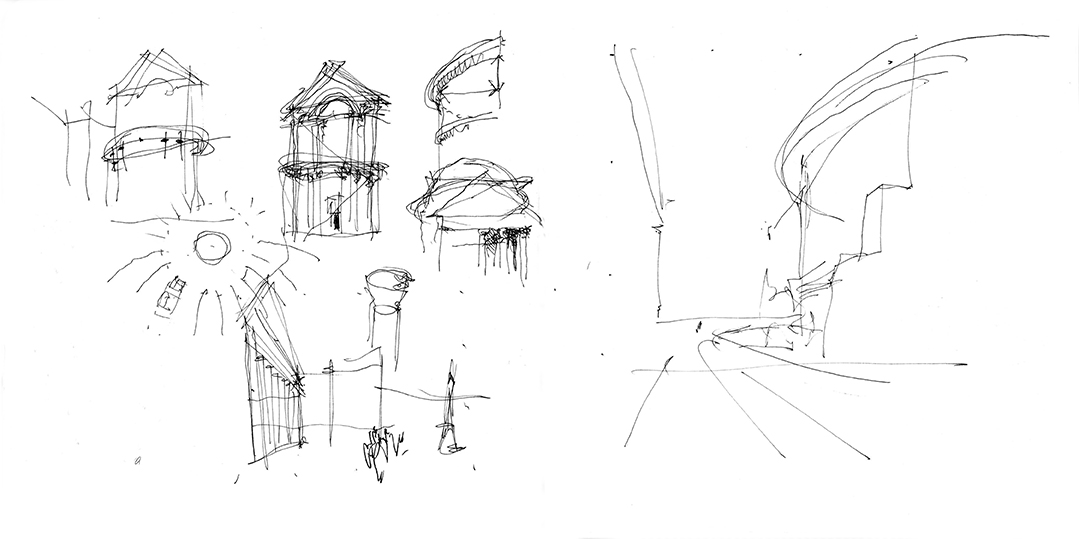
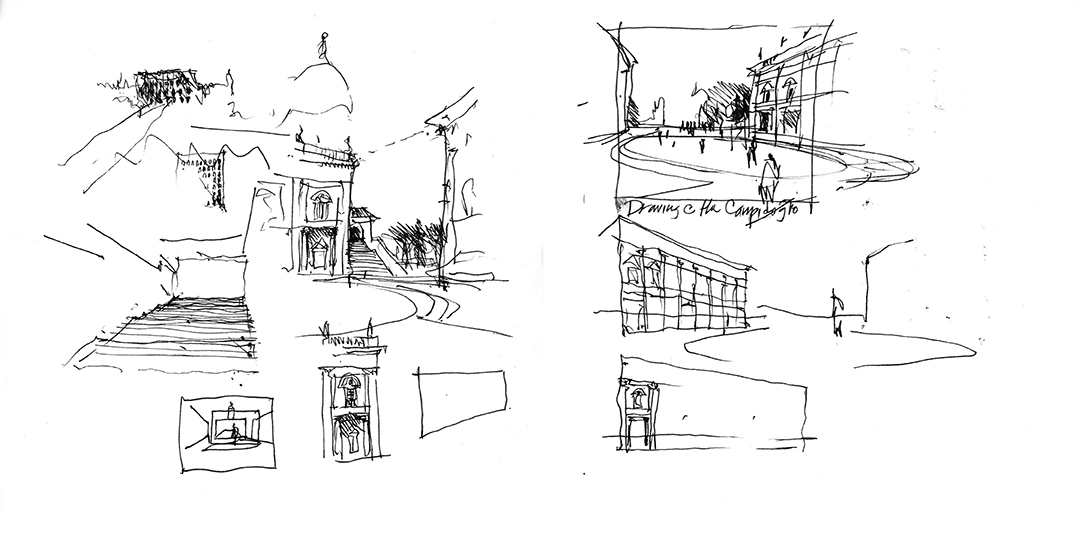
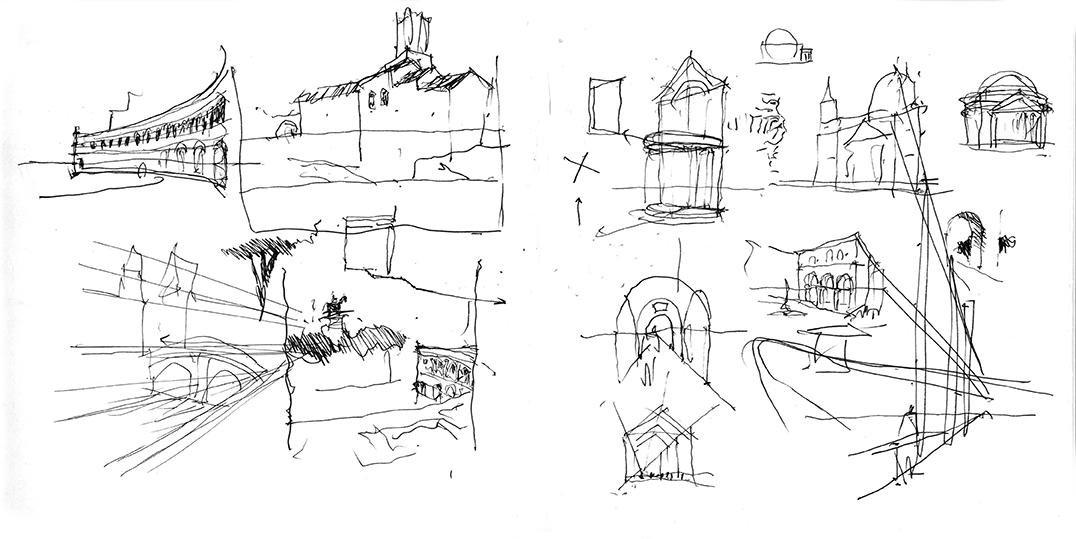
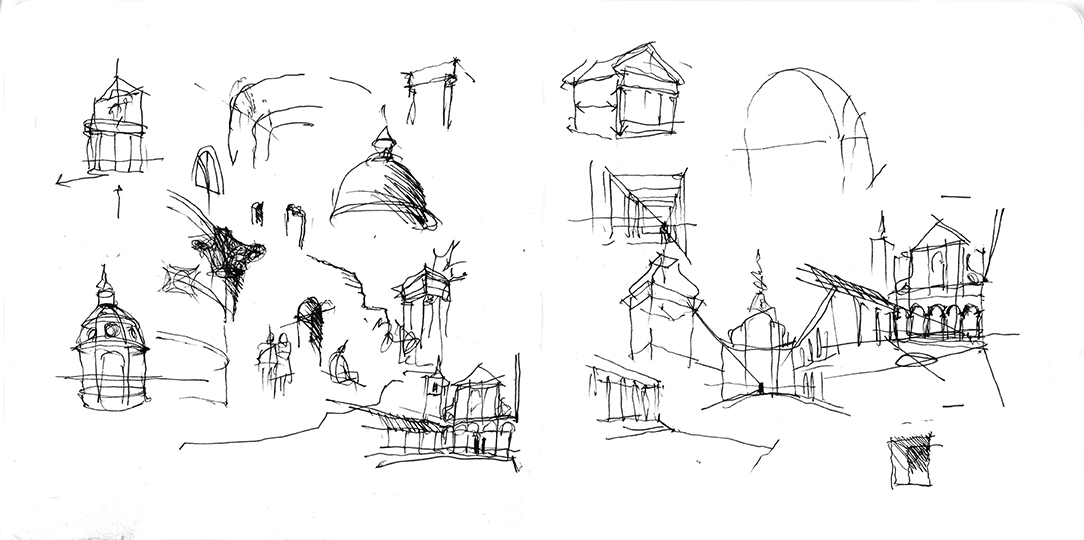
A few pages of quick studies done to demonstrate certain drawing principles to students. In some cases, they reflect the initial lines that provide a backbone or structure for a sketch to be developed as time permits. In others, they serve to illustrate how to establish proportional relationships, ascertain the horizon line in a scene, or work out the geometry of forms. Regardless of their purpose, the practice of doing these small sketches can contribute to the important development of fluidity of vision and line.
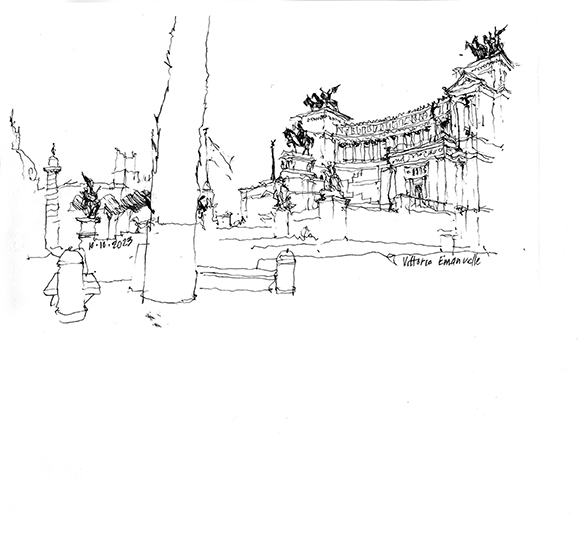
A sketch done in the early morning while waiting for students to arrive for a tour of the Vittoriano, an important national monument built between 1885 and 1935 to honor Victor Emmanuel II, first king of a unified Italy. Not your usual view of what some call “The Typewriter” or “The Wedding Cake,” taken from a small park looking east across Via del Teatro di Marcello.
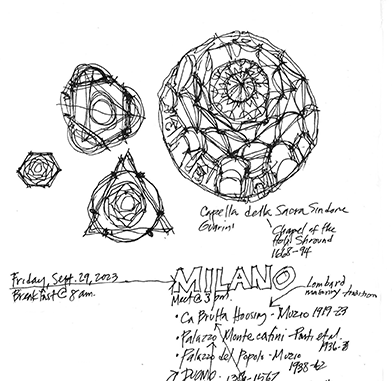
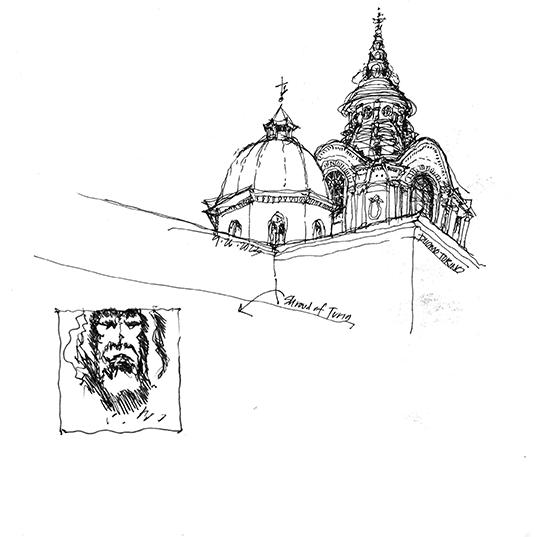
After a thoroughly enjoyable sojourn in Sicily, I departed for Torino, where I met up with faculty and students participating in the UW Architecture in Rome program. Unfortunately, I came down with Covid shortly after arriving in Torino but I managed to maintain a presence while recovering. Above are a few views of Torino, including a two-page spread that illustrates how I take notes, both verbal and graphic, while on day trips.
Until I returned home to Seattle, I did I not fully grasp how Covid had affected not only how I felt (tired) and my sense of taste, but also my ability to fully experience the joy of being in Rome once again.
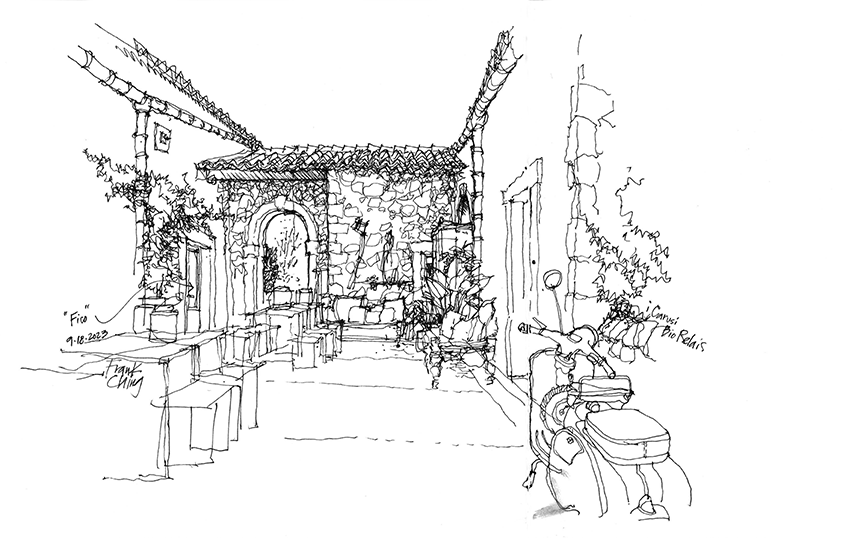
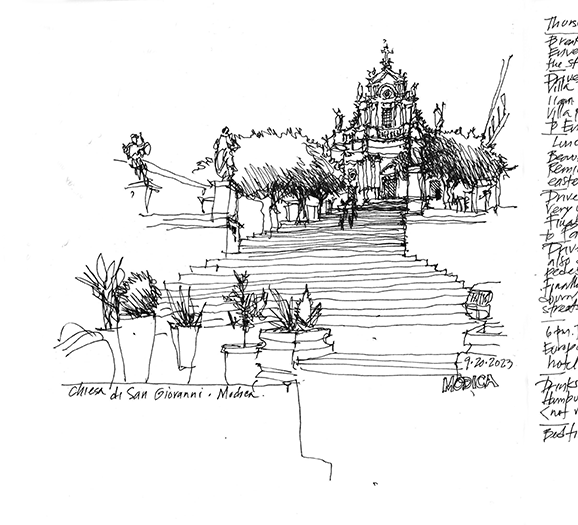
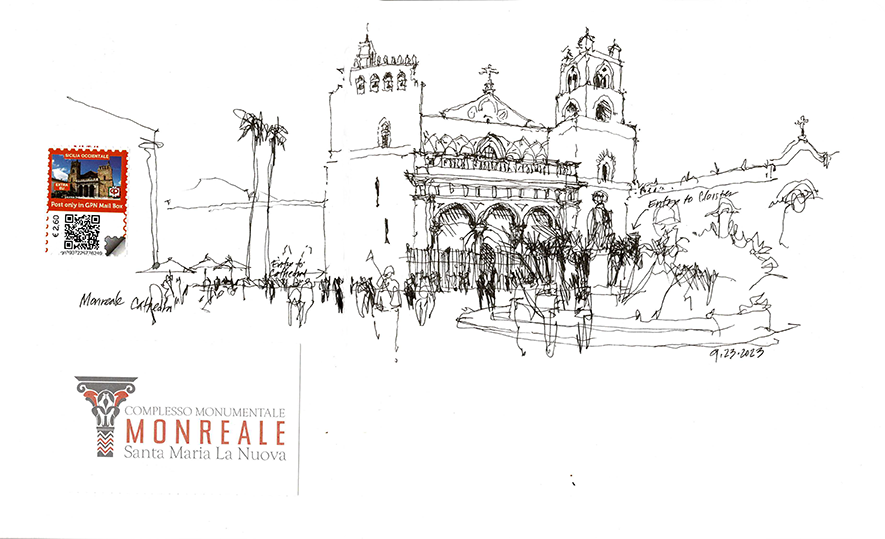
Here are a few scenes from a wonderful time we spent in the southwest of Sicily with friends in the fall of 2023. First is the courtyard of a small hotel set beautifully overlooking the Gulf of Noto. The second is the Chiesa di San Giovanni situated high above the town of Modica. And the third is of the western facade of Monreale Cathedral and the bronze doors of Bonano Pisano as seen from the Piazza Guglielmo II. It was too daunting to try to capture the brilliance of the exquisite Byzantine mosaics on the interior.
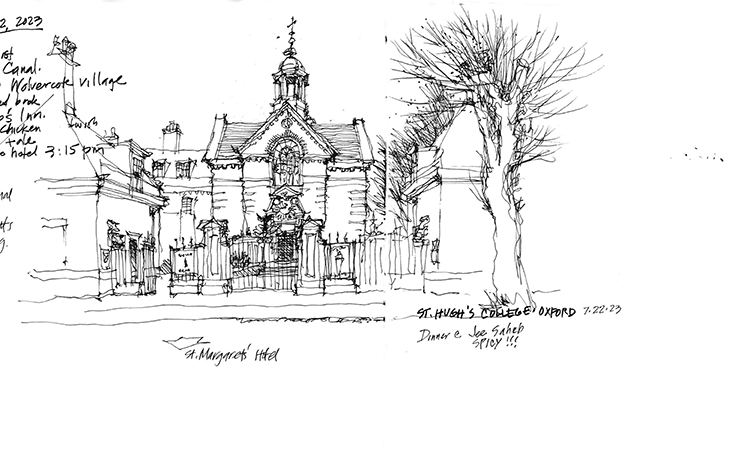
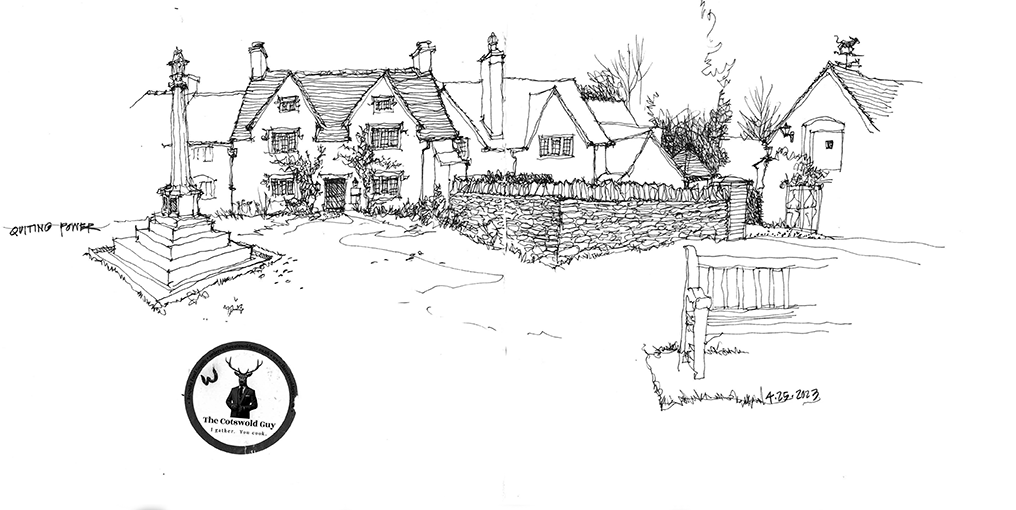
Here are a couple of scenes from our 2023 trek through the Cotswolds. The first is the entrance to St. Hughes College just across the street from St. Margaret’s Hotel, where we stayed while in Oxford. The second is of the small village of Quiting Power, Gloucestershire, home to The Cotswold Guy’s original farm shop and café.
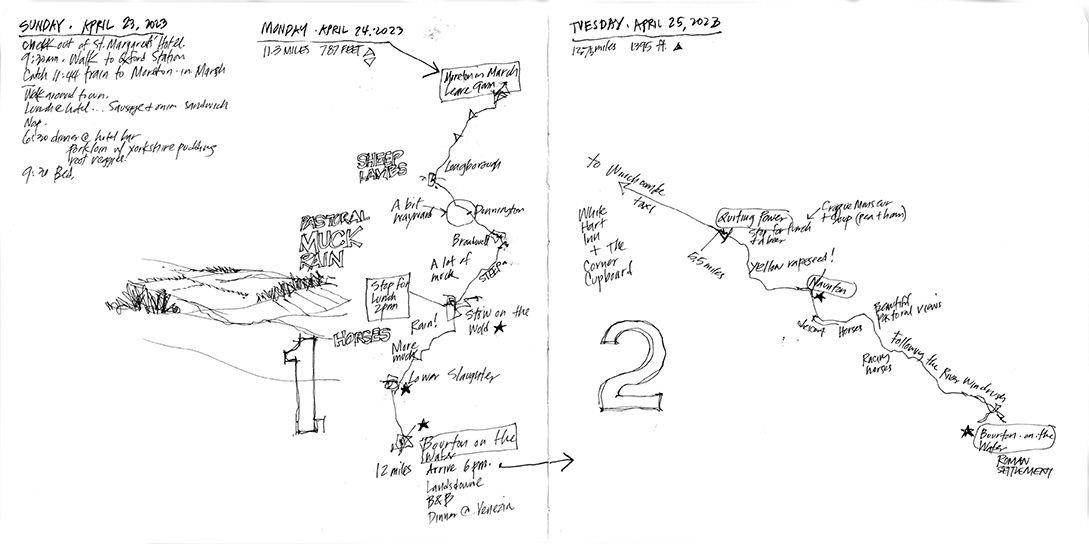
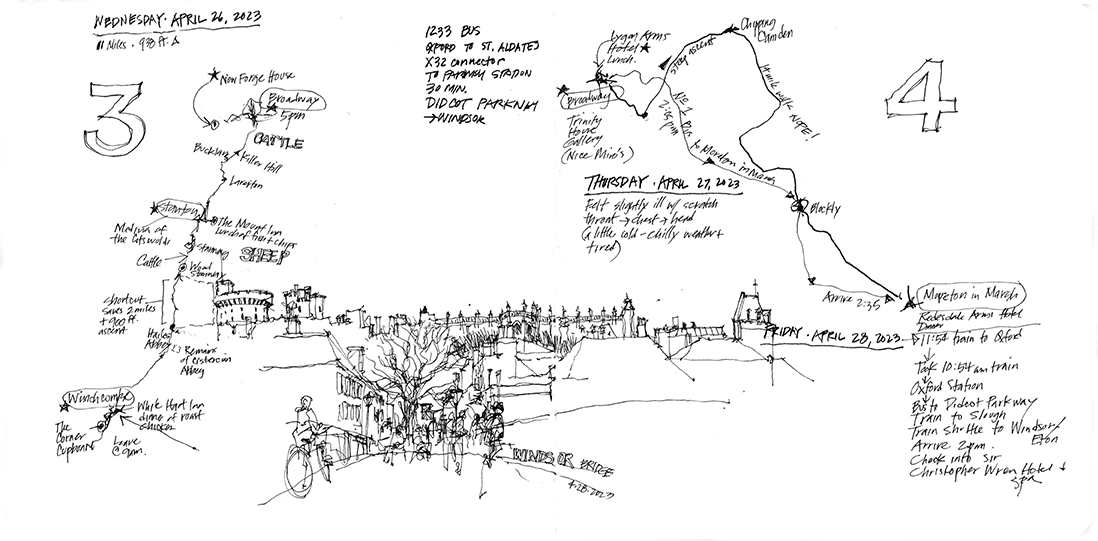
In 2023, my wife and I, along with friends, embarked on a 4-day trek through the Cotswalds. These two pages document our daily journeys, using a roughly drawn map of the paths we took from village to village as a base for annotating and recording the sights and sounds we experienced along the way.
It was interesting to compare the “quaint” villages and picturesque countryside one sees in the movies and on TV with the real-world counterparts, which took a little bit of the shine off of the former. But, overall, we enjoyed the “charming” places we visited.
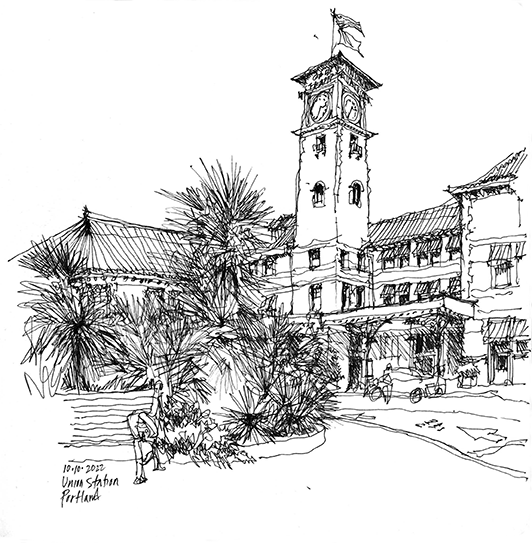
Union Station in Portland, Oregon, became a familiar sight as I traveled back and forth between Seattle and Portland via Amtrak for two eye surgeries in 2022. Designed by Van Brunt & Howe, the station began construction in 1890 and opened in 1896. The signature piece of the station is the 150-foot-tall Romanesque Revival clock tower featuring an 1898 Seth Thomas pendulum clock on its four faces. The station was placed on the National Register of Historic Places in 1975.
William J. Samford Hall houses Auburn University’s administration, planning, and public relations offices. Built in 1888 after a fire destroyed “Old Main” on the present site, the structure, with its iconic clock tower, is now part of the Auburn University Historic District.
As with the previous post, there are two images above. On the left is my first attempt at blocking out Samford Hall. You can see how the structure fills the page and the top of the clock tower appears to be cut off. Note also how the dark figures establish the scale of the forecourt.
To give the structure more breathing space, I moved back to allow the engraved Auburn University sign to frame the scene in the foreground and also enable the entire clock tower to be included.
Another lesson in composing, framing, and providing context.
After a few years’ absence, with only a smattering of postings to celebrate Lunar New Years, mark the 50th anniversary of the beginning of my teaching career, and mourn the losses caused by the devastating fire in Lahaina in 2023, I will again be posting drawings occasionally as time permits.
This first set are drawings of a stave church built in the early 13th century. While I usually advocate for including context in a scene, here I omitted the surroundings as the church was moved from Gol, Norway, to the Norsk Folkemuseum outside of Oslo, where it now resides as a set piece.
What you see on the left is my first attempt, which illustrates a common error made when beginning a drawing—that of working from the top down. Beginning with the topmost pyramidal tier and tentatively blocking out the lower tiers, I soon realized that I wouldn’t have enough room to complete the structure with the proper proportions. Rather than squeeze the structure in by distorting the proportional relationships, I began anew with the right-hand drawing.
Here, I followed an important principle—work from the whole to the parts, to keep everything in proportion and still maintain an image that will fit the page. Working this way, one first fits the overall height on the page, and then carefully subdivide the proper number of tiers. Whether beginning with the overall height of a subject, as in this case, or the overall size of a vertical plane, it is almost always a good idea to begin with as large an element in the composition as possible to ensure the subject and its context will fit the page.
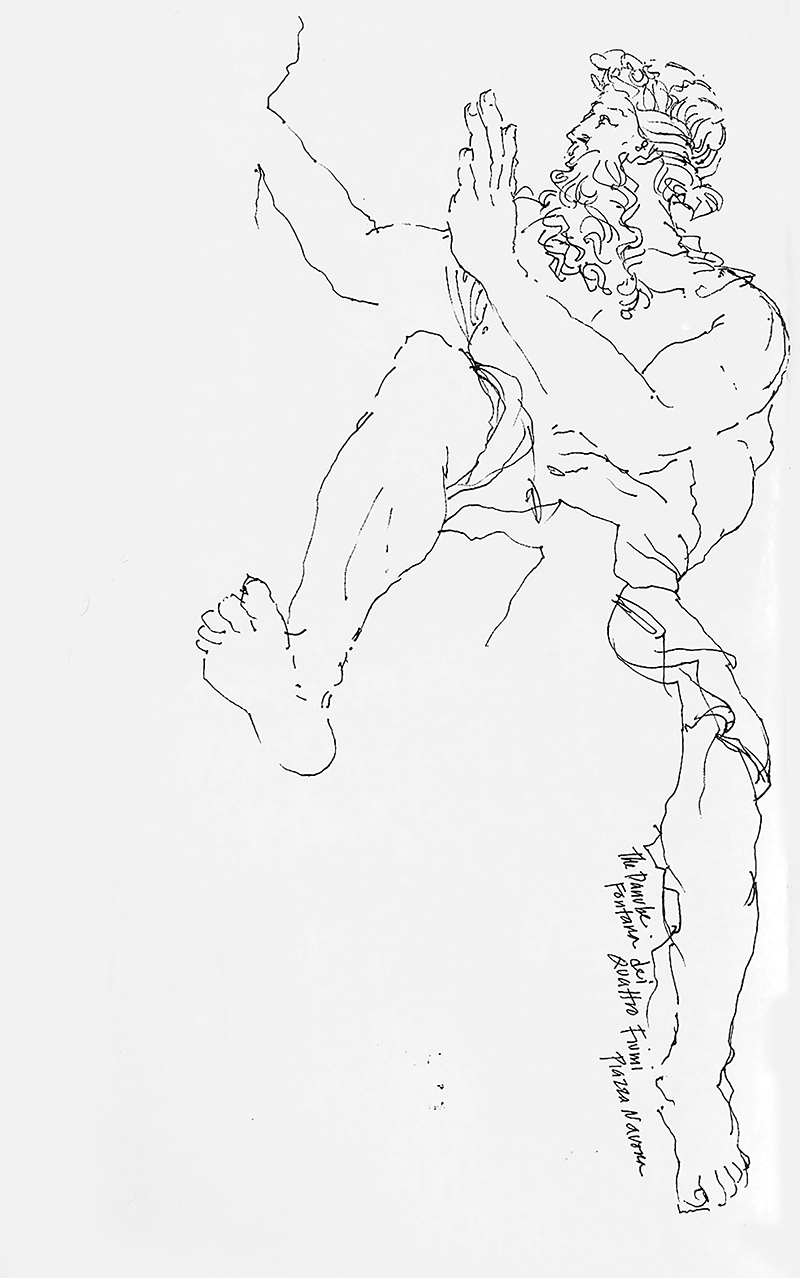
This a line drawing of the Danube, one of the Four River Gods in Bernini’s fountain in Rome’s Piazza Navona. The line is the quintessential element of drawing, able to convey to the mind’s eye three-dimensional forms in space, often not by its presence but rather by its absence—where we decide to stop a contour…and pick it up again.
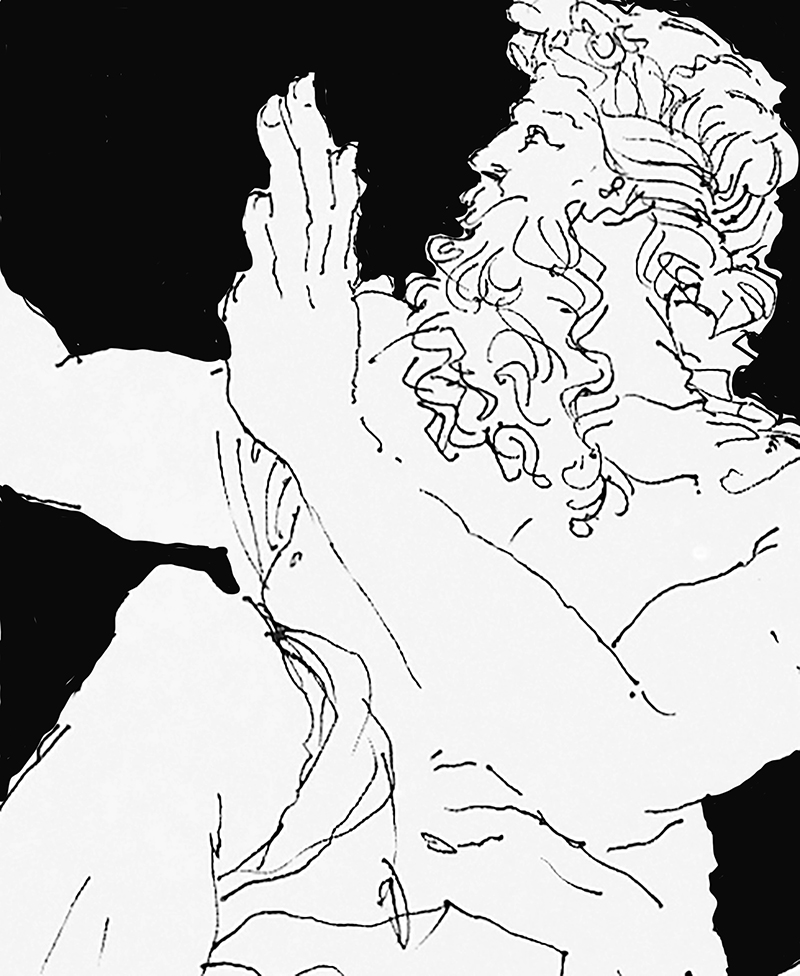
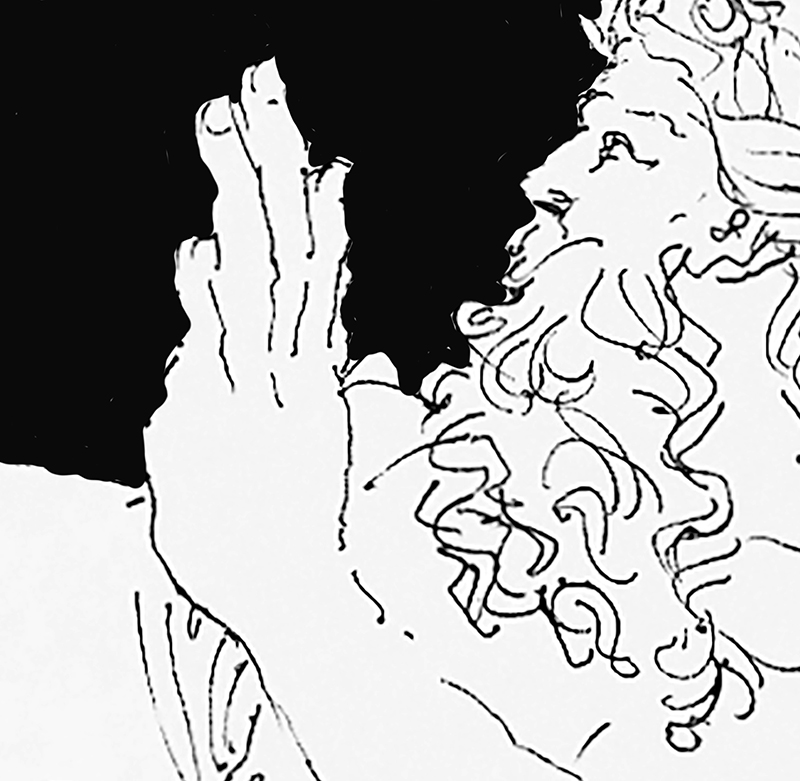
These cropped enlargements of the original drawing use areas of black to emphasize the negative spaces of the drawing and the white of the sculpture. This brings to mind notan, the Japanese term for “light dark;” some translate it as “light dark harmony.” It is a concept revolving around the placement and interplay of light and dark elements in the composition of a collage, drawing, or painting. It is valued as a way to study possible compositions without the distractions of color, texture, or details.