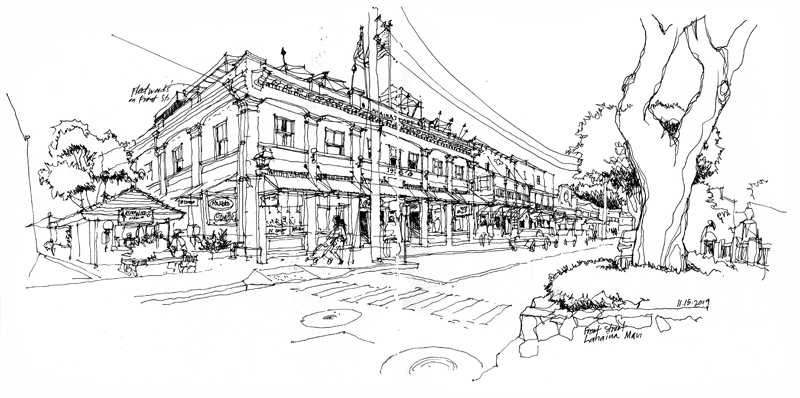
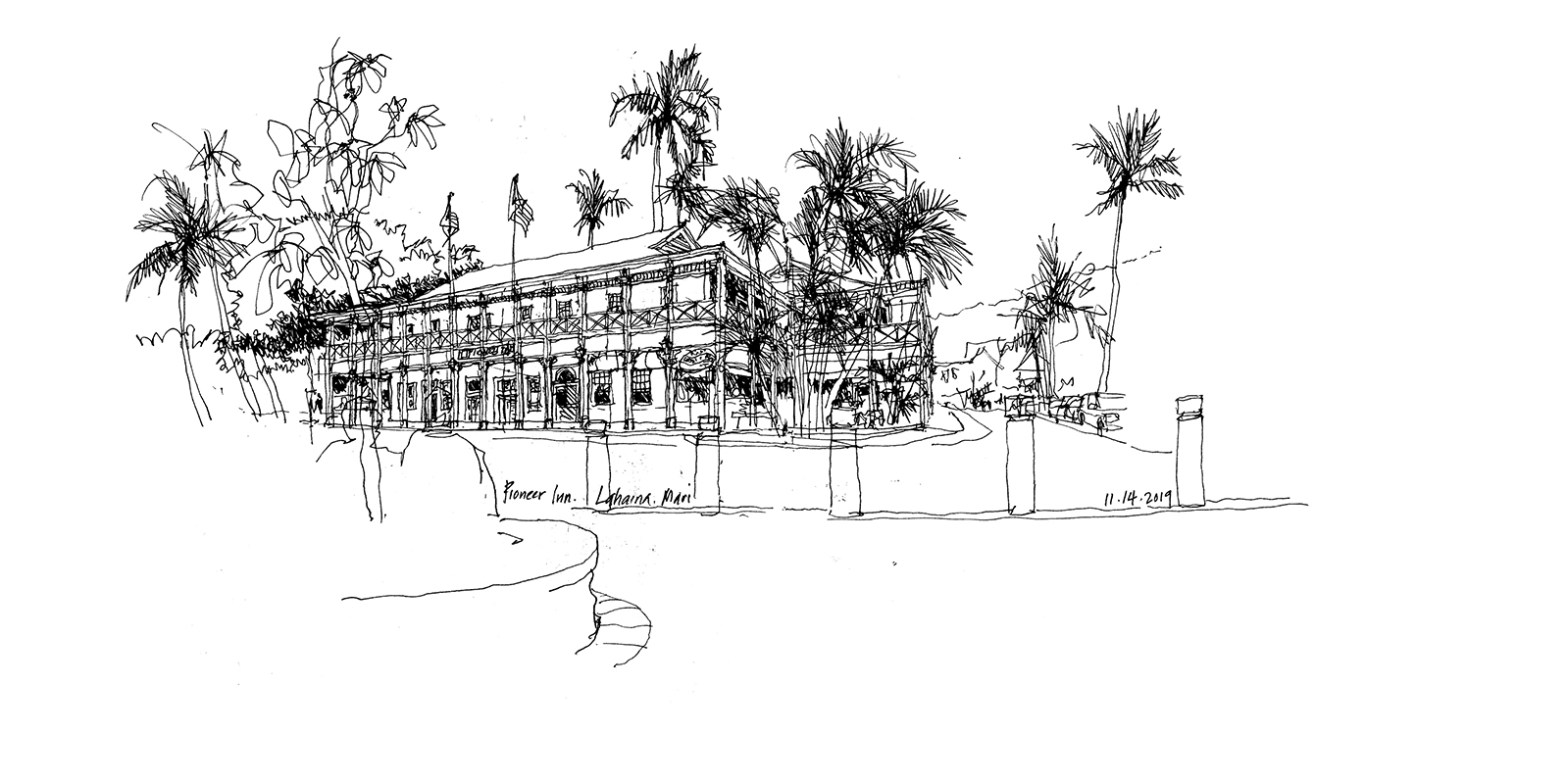
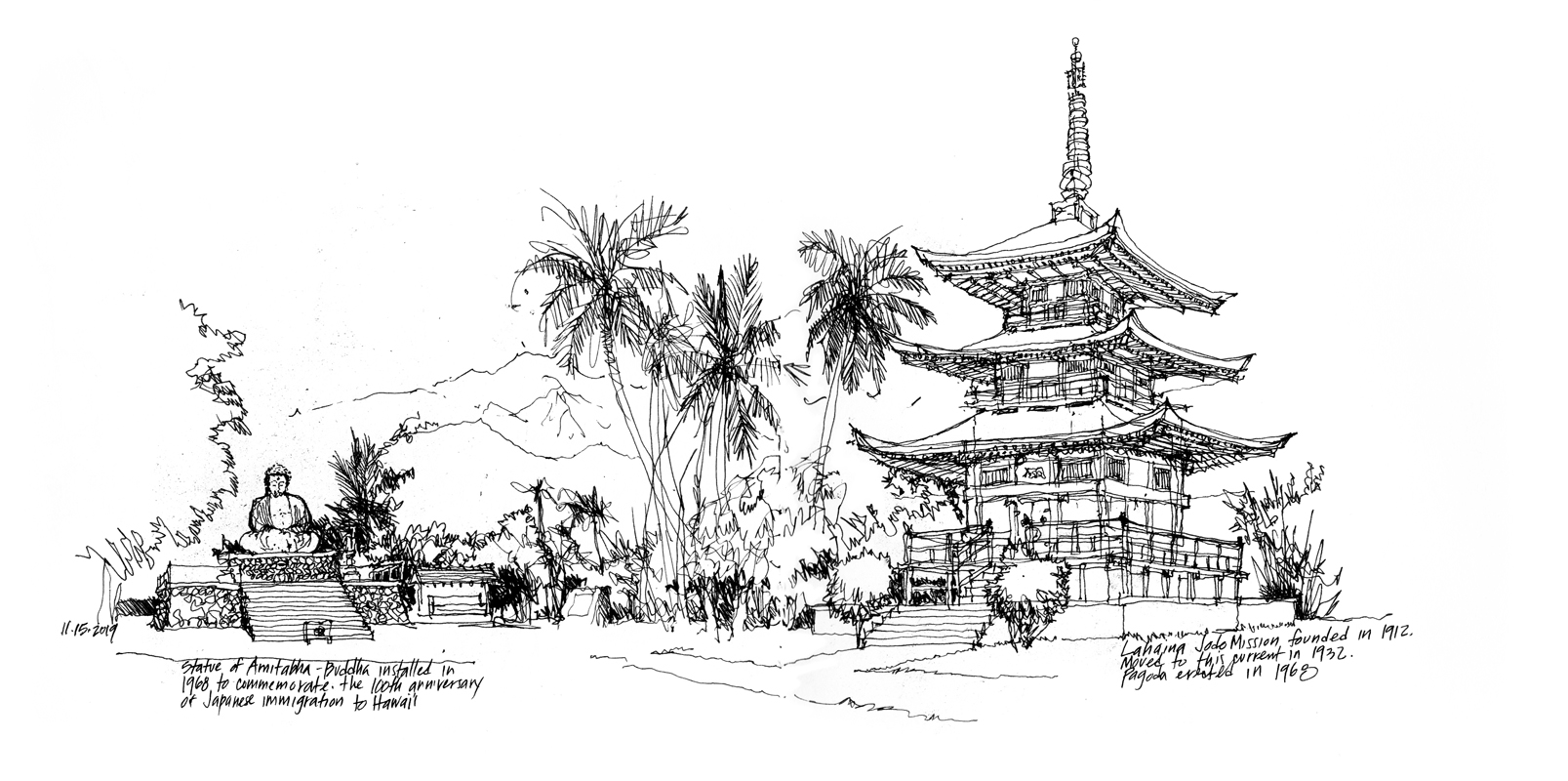
for the thousands of acres on Maui Island torched by wind-blown wildfires, and especially the devastation of Lahaina Town, these images recall what once was—Front Street in Lahaina Town, the Pioneer Inn built in 1901, and the Jodo Mission Buddhist Temple founded in 1912.
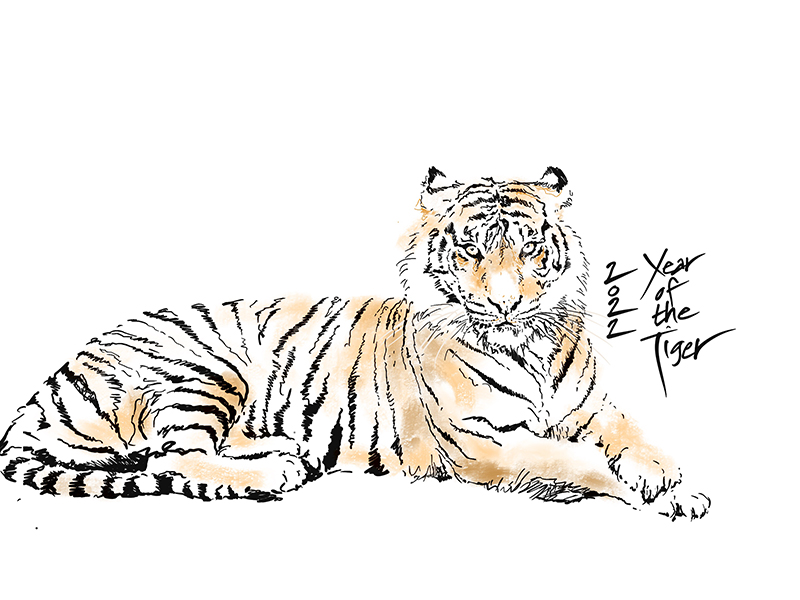
In the Chinese Zodiac, this is the Year of the Tiger, beginning on February 1, 2022. The Tiger is an animal valued for its courage, boldness, and confidence. Those born under this sign are said to be ambitious, optimistic, and enthusiastic by nature and possess strong self-esteem and high energy, especially at work. Some say tigers can also be stubborn and brash. Famous people born in the Year of the Ox include Marilyn Monroe, Fidel Castro, Jonas Salk, Ansel Adams, Lady Gaga, and Stevie Wonder. Kung Hee Fat Choy!
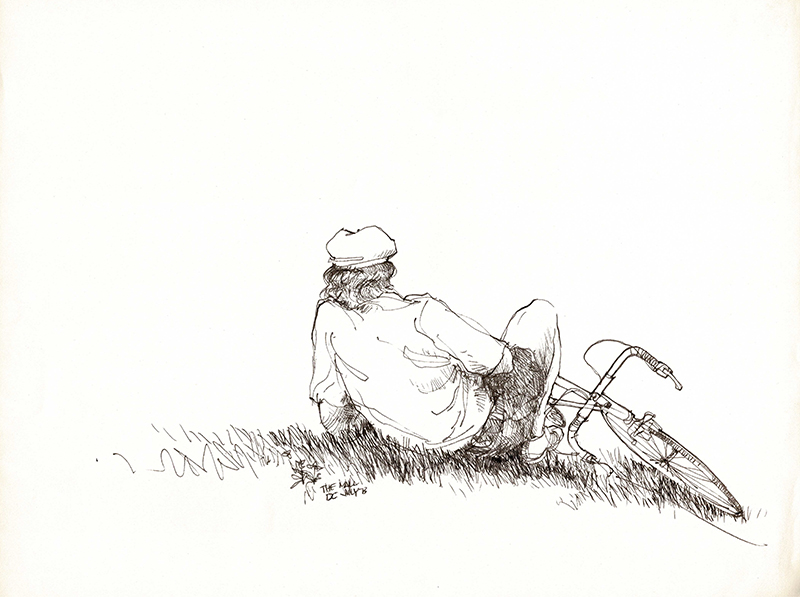
As some may have noticed, the time between postings has grown lately. While the cooler, wetter weather discourages me from going out to draw, I also need time to work on two book revisions. And so I will be taking a break from posting for a while, leaving you with this ink sketch I did of a bicyclist relaxing on The Mall in DC in 1973.
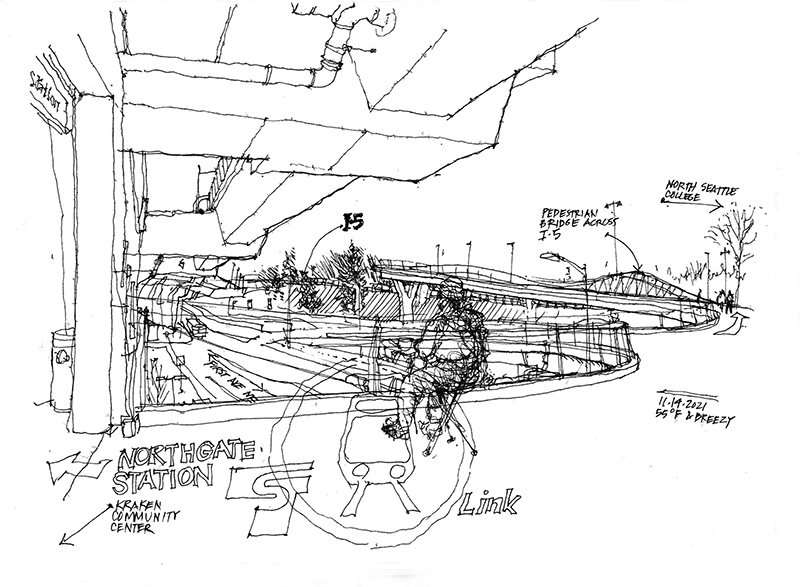
The Northgate Extension added three new stations to Sound Transit’s Link Light Rail system—the underground U-District and Roosevelt stations as well as an elevated station at Northgate, where the Seattle Urban Sketchers met this past Sunday. It was a cold, breezy day with rain showers and so I chose this view looking south from under a covered entrance to the station. The Northgate station is located near a park-and-ride, has frequent bus connections to the greater Seattle region, and is connected via a bicycle/pedestrian bridge across I-5 to the North Seattle College campus to the west. It also leads to the former Northgate shopping center, which is being converted into a mixed-use, transit-oriented development, built around the Seattle Kraken offices and practice facility, and the Kraken Community Iceplex.
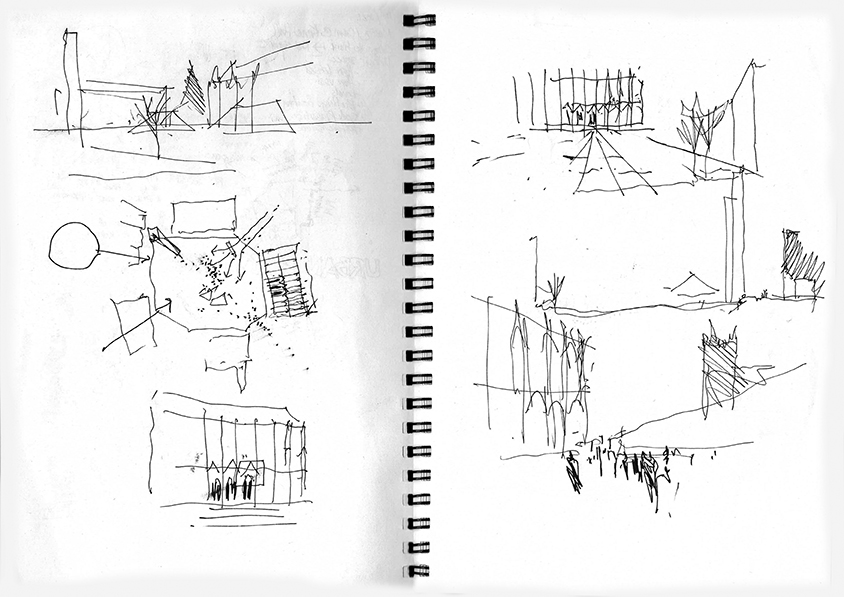
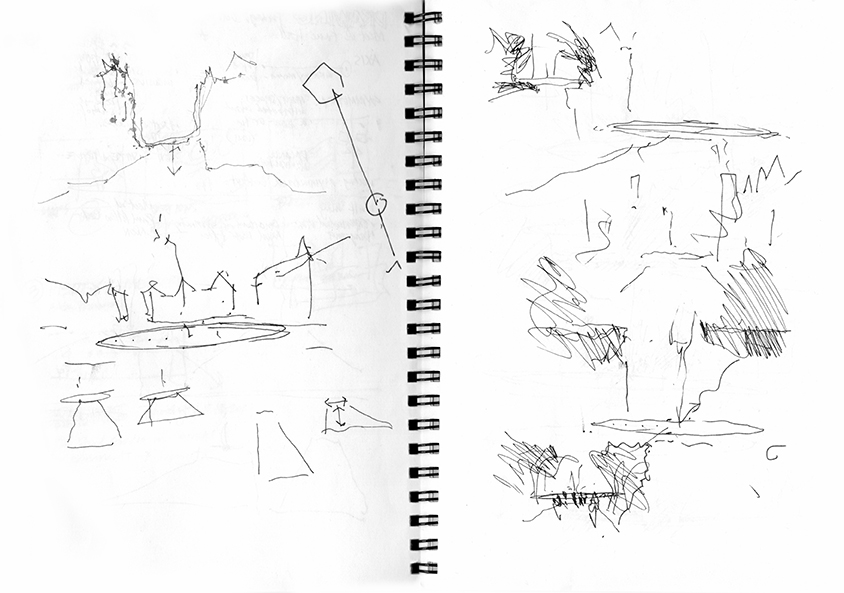
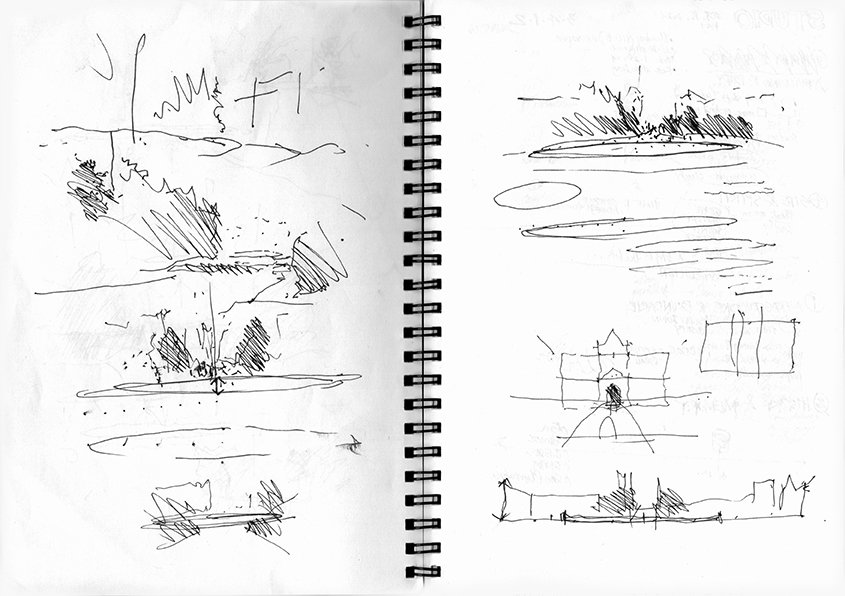
A few two-page spreads of the small sketchbook I am using while teaching a short-term course on drawing on location at the UW. Quick sketches, freely drawn, to illustrate selecting viewpoints, outlining process, roughing out structure, gauging proportion, and establishing scale.
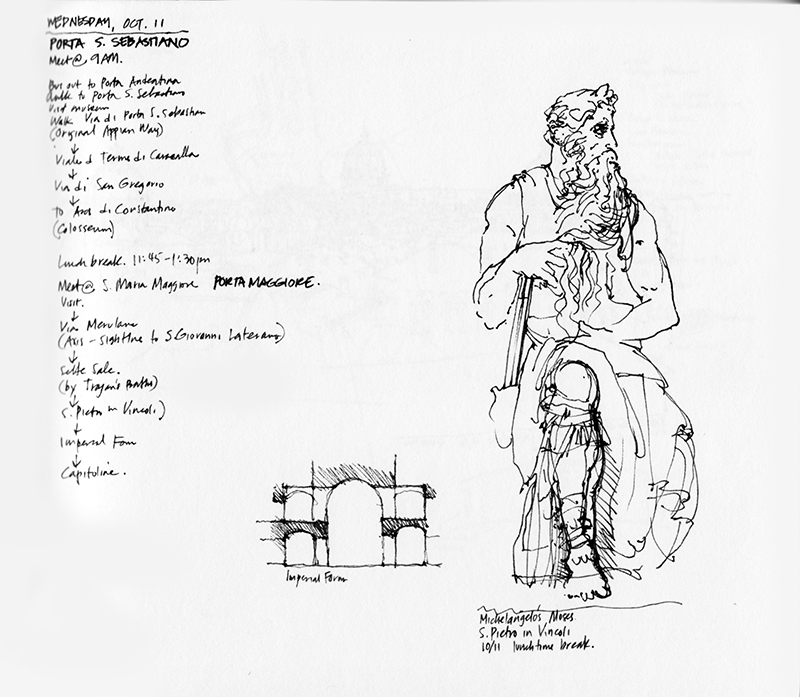
In shifting our gaze from the subject before us to the paper surface with pen in hand, we must be able to hold the seen image in our head and recreate it on paper. Oftentimes, this translation can result in faulty proportions, as in this drawing of Michelangelo’s Moses in S. Pietro in Vincoli, in Rome. You will notice that I made a couple of attempts at getting the length of the lower right leg to match what I believed I saw in Michelangelo’s sculpture. This is an example of how the process of drawing from observation requires continually assessing whether the proportions and scale of the drawn image matches those of what is seen—a matter of trial and error.
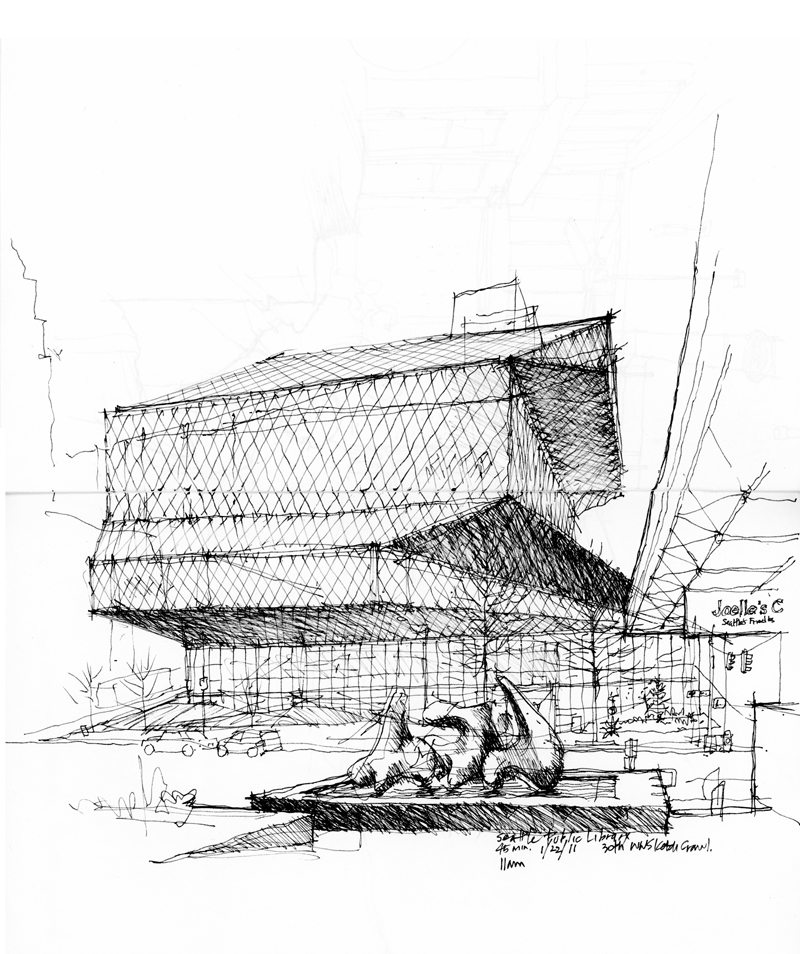
Above is another example, where, beneath the gridded facets, you might be able to see my initial attempts in roughing out the forms of the Seattle Central Library by OMA/Koolaus. Initially, I drew the forms too narrowly given the building’s height. I kept increasing the width as the drawing developed. In looking at the drawing now, it seems that it could be wider still.
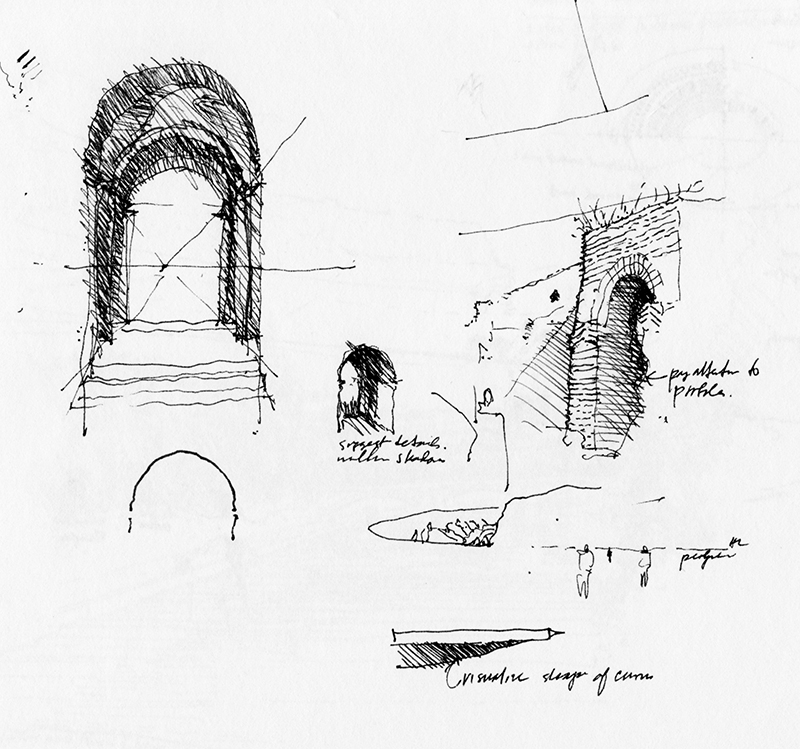
From a Rome journal, two pages of sketches drawn during a teaching session. The first page contains explanatory sketches accompanied by bits of concise text: “Pay attention to profiles”…“Suggest details within shadows”…“Visualize shape of curves.”
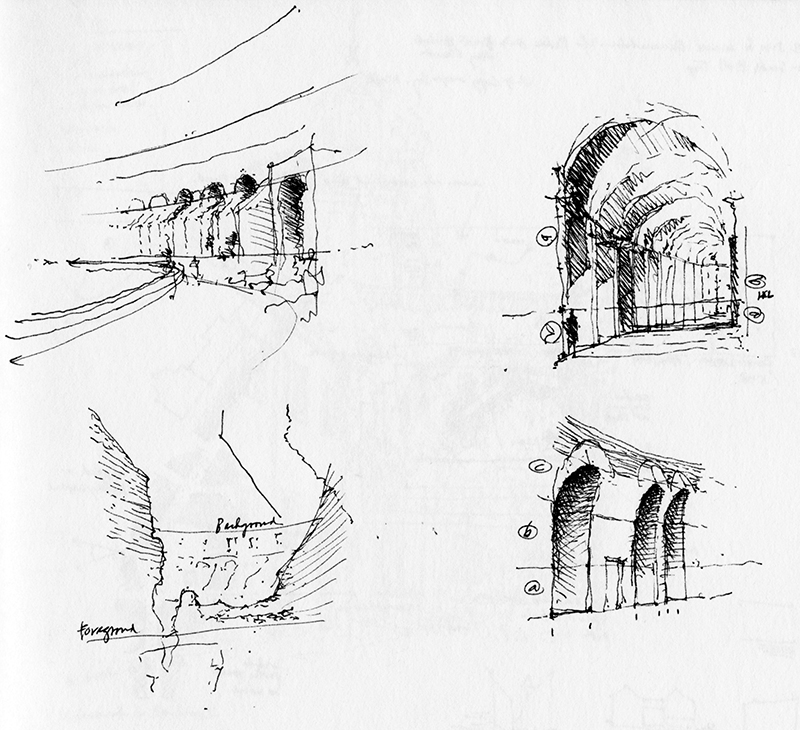
The second page illustrates how to estimate proportional heights above and below an imagined horizon line.
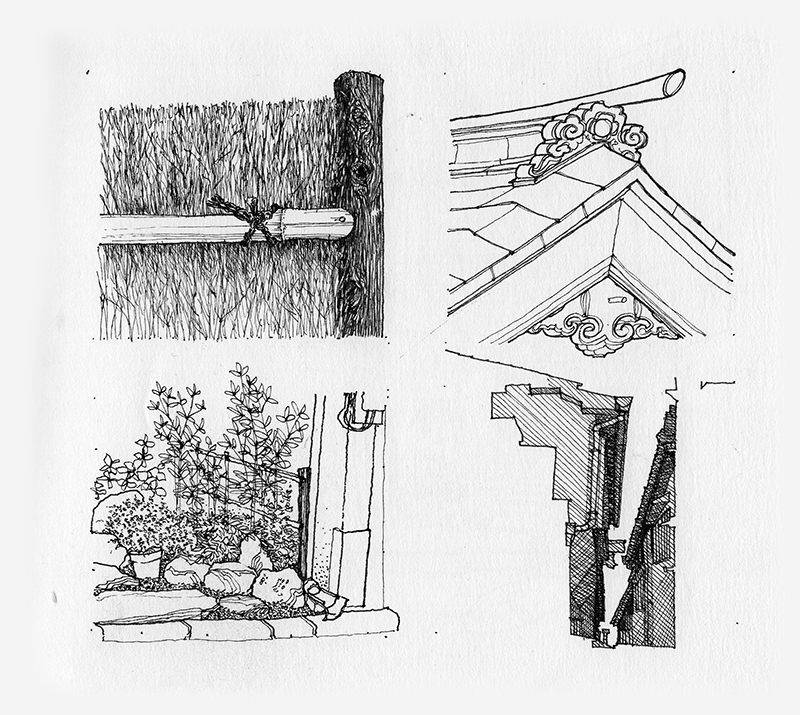
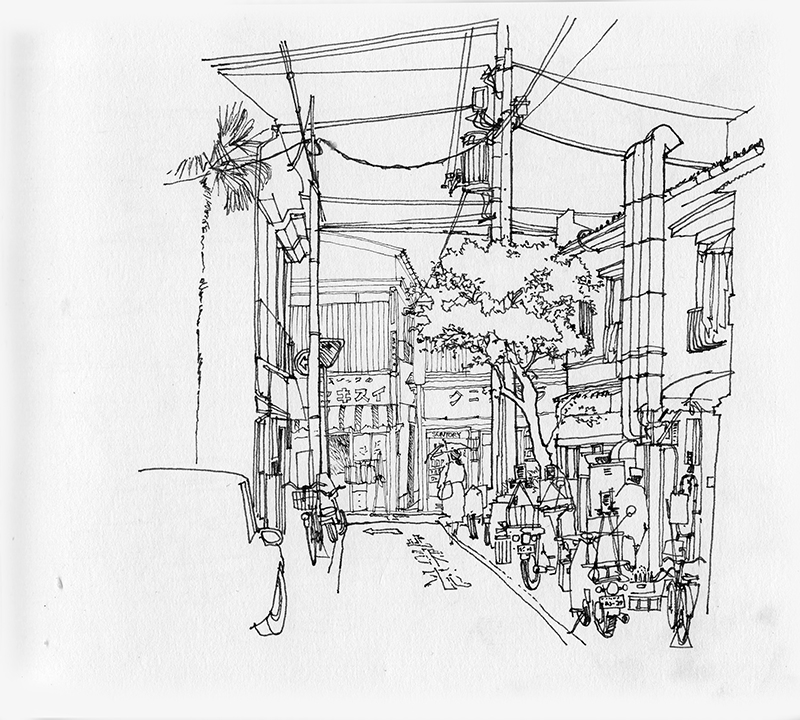
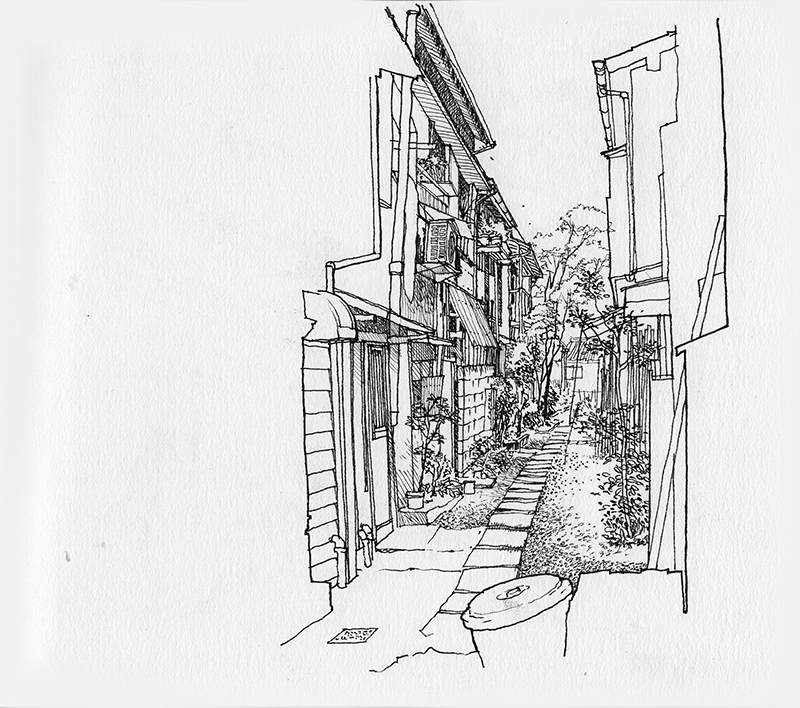
Around ten years ago, I posted a few drawings from a journal I kept during a month’s stay in Japan in 1990. Wiley subsequently published a facsimile in 2000, Sketches from Japan, which is now out-of-print. Here are a few more pages from that journal, all drawn with a Mont Blanc fountain pen and using a contour line approach to the subject matter. The page above contains details that caught my eye as I walked the streets of O-Okayama. Below are a couple more street scenes of O-Okayama, a suburb of Tokyo where the Tokyo Institute of Technology is located.
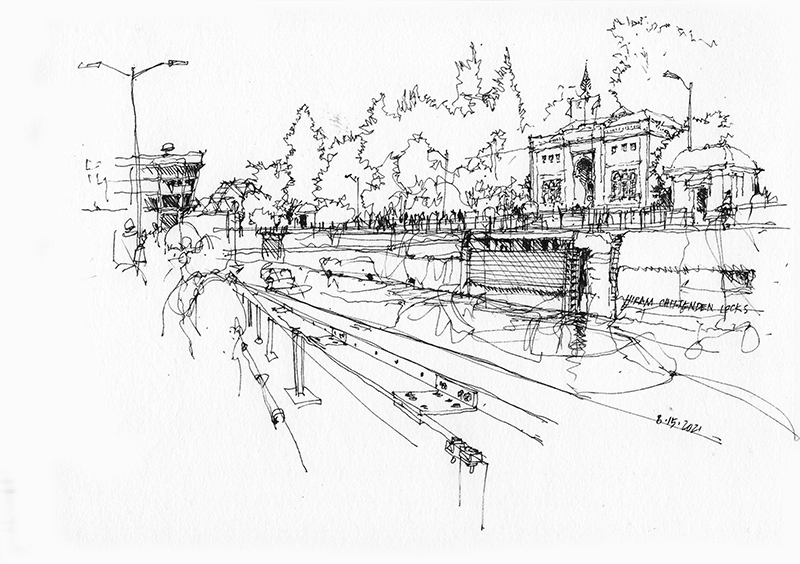
The Seattle Urban Sketchers group met this past Sunday at the Hiram M. Chittenden Locks (aka Ballard Locks), which separates the fresh waters of Lake Union and Lake Washington to the east from the tidal waters of Puget Sound to the west. We’ve met here before, in August of 2019. This time, I chose to draw the larger of the two locks, beginning when it was closed and ending with it open and accepting vessels small and large, in from the west. Because of the constant movement, it was possible to merely suggest the boat traffic.
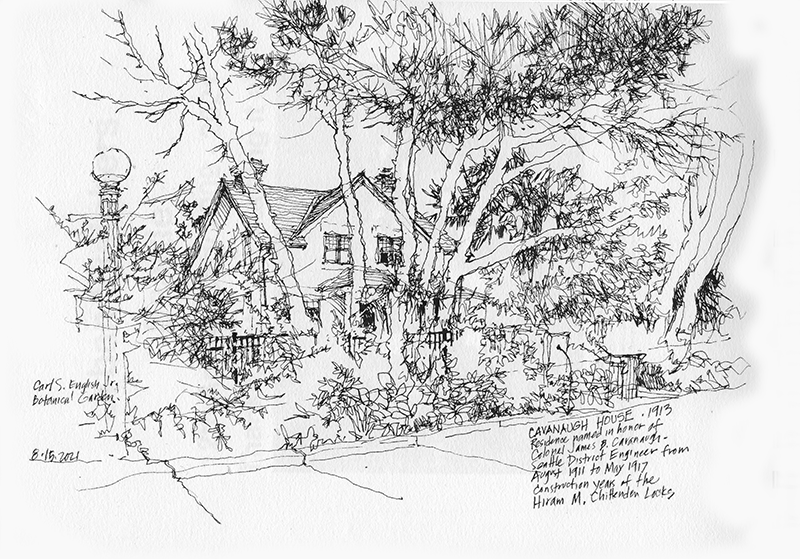
Part of the Ballard Locks complex is the Carl S. English Botanical Garden, in which is sited what is known as the Cavanaugh House, named “in honor of Colonel James B. Cavanaugh, Seattle District Engineer from August 1911 to May 1917, construction years of the Hiram M. Chittenden Locks.” The house was renovated in 1966 to become the official residence of the US Army Corps of Engineers’ Chief Engineer during their 3-year tenure in the Seattle District.
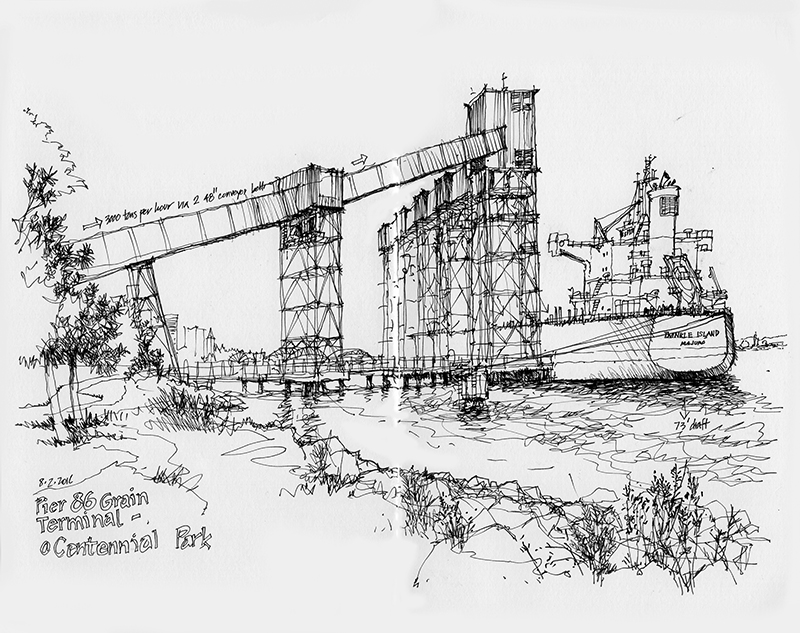
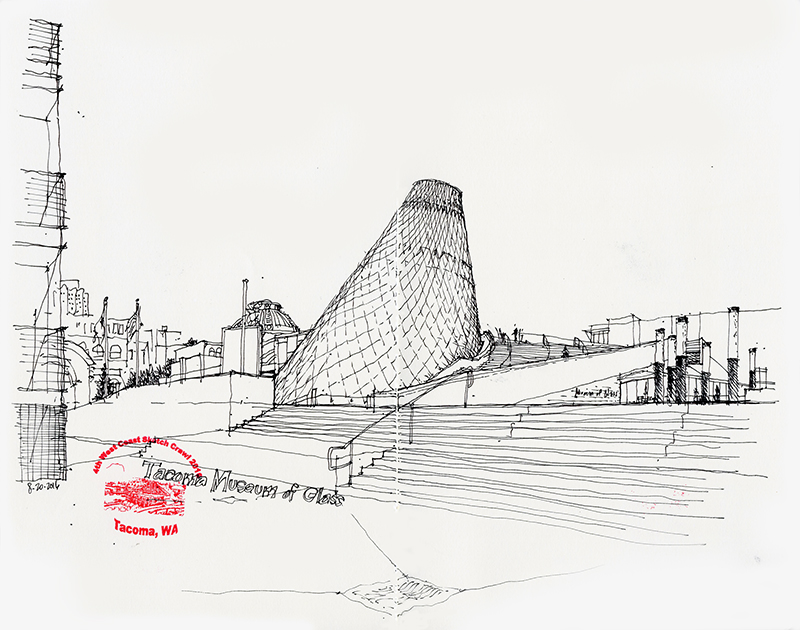
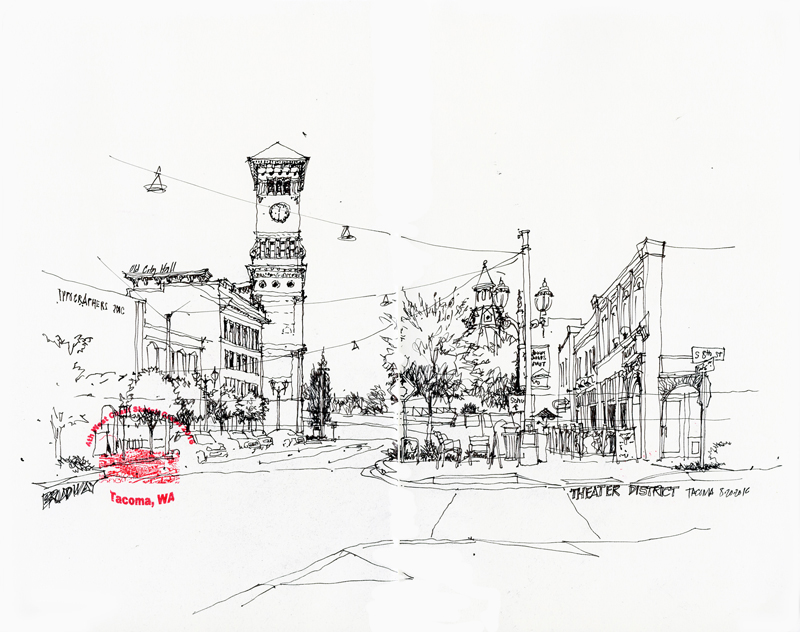
Looking back at a few sketches done five years ago. Above is a view of the Pier 86 Grain Terminal along the Seattle waterfront. Below are the iconic and Glass Museum and the Old City Hall in downtown Tacoma.